Polymeric nanomedicines reprogram the tumor microenvironment to turn cold tumors hot
GA, UNITED STATES, October 9, 2026 /EINPresswire.com/ -- Cancer immunotherapy often fails because the tumor
Press Release Disclaimer: This is a press release distributed through the XPR Media network. It has not been independently verified by our newsroom.
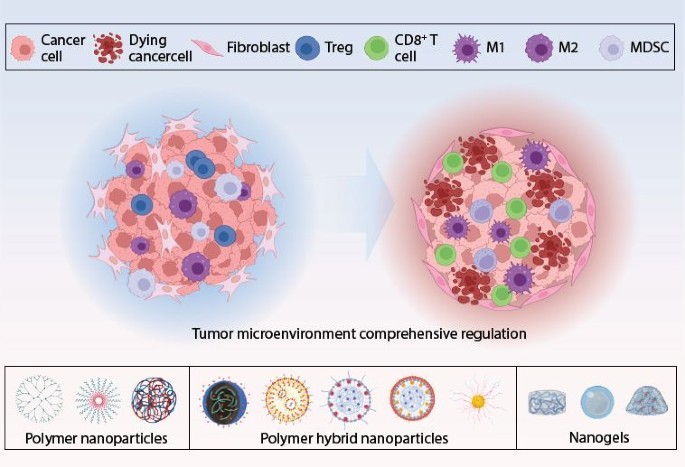

GA, UNITED STATES, October 9, 2026 /EINPresswire.com/ — Cancer immunotherapy often fails because the tumor microenvironment (TME) actively suppresses immune responses, promoting angiogenesis and immune tolerance. A new review highlights how polymeric nanomedicines can comprehensively regulate the TME—reprogramming immunosuppressive stromal cells, remodeling the extracellular matrix (ECM), normalizing tumor vasculature, and modulating soluble signaling and metabolic components—to convert immunologically “cold” tumors into “hot,” treatment-responsive ones. The authors also outline the development of integrated theranostic platforms that combine therapeutic nanomedicines with imaging modules, enabling simultaneous cancer immunotherapy and dynamic, in situ monitoring of immune responses, paving the way for personalized treatment strategies.
Solid tumors are not merely collections of malignant cells but complex ecosystems comprising tumor cells, stromal cells, and the extracellular matrix (ECM). The tumor microenvironment (TME) fosters immunosuppression through tumor-associated macrophages (TAMs), myeloid-derived suppressor cells (MDSCs), regulatory T cells (Tregs), and cancer-associated fibroblasts (CAFs), while physical barriers such as dense ECM and abnormal vasculature hinder drug penetration. Single-target therapies often fail because destroying one barrier allows others to compensate. Based on these challenges, there is an urgent need to systematically investigate multi-dimensional TME regulation strategies and integrated theranostic platforms for enhanced cancer immunotherapy.
Researchers from Xiamen University, the Changchun Institute of Applied Chemistry (Chinese Academy of Sciences), and the University of Science and Technology of China published a review on June 10, 2026, in the Chinese Journal of Polymer Science. The review summarizes advances in polymeric nanomedicine-based strategies for TME regulation and the development of comprehensive therapeutic platforms integrated with imaging segments for real-time immune status tracking.
The review systematically dissects polymeric nanomedicine strategies for TME regulation across three core dimensions: cellular, physical, and biochemical. For stromal cells, polymeric carriers deliver vitamin C, curcumin, Toll-like receptor (TLR) agonists, and messenger RNA (mRNA) encoding M1-polarizing factors to reprogram TAMs; encapsulate gemcitabine, all-trans retinoic acid (ATRA), and ibrutinib to deplete or differentiate MDSCs; transport small interfering RNA (siRNA) against programmed cell death protein 1 (PD-1) and cytotoxic T-lymphocyte-associated protein 4 (CTLA-4) to inhibit Tregs; and deliver salvianolic acid B and quercetin to inactivate CAFs. For physical barriers, nanomedicines degrade and remodel the ECM via hyaluronidase and photothermal effects, while normalizing vasculature through vascular endothelial growth factor (VEGF) silencing and anti-angiogenic agents. For soluble signaling and metabolism, platforms modulate cytokines and chemokines, deplete lactate, regulate glucose metabolism, and scavenge glutathione (GSH) to reverse immunosuppression. Notably, the authors’ groups developed “cocktail” nanoplatforms co-delivering chemotherapeutics, plasmid DNA encoding small hairpin RNA (shRNA), and immune checkpoint inhibitors, achieving superior tumor regression by simultaneously targeting multiple TME components. The review also highlights non-invasive imaging modalities—near-infrared II (NIR-II) fluorescence, ultrasound, magnetic resonance imaging (MRI), and urine-based reporters—for tracking immune activation and guiding therapy.
The authors said that the field is evolving beyond simple combinatorial delivery toward intelligent theranostic systems. They explained that by endowing polymeric nanoplatforms with real-time, in situ sensing capabilities—such as tracking immune cell infiltration or effector enzyme activity—researchers can obtain dynamic feedback on treatment response. They emphasized that this closed-loop, adaptive approach could enable precise modulation of host immunity, maximizing efficacy while mitigating risks such as cytokine storms and immune overactivation. They added that such integrated platforms represent a promising foundation for translating preclinical mechanistic studies into clinically relevant, personalized cancer immunotherapies.
These polymeric nanomedicine strategies hold significant translational potential. By coordinating immune cell modulation and stromal remodeling, they dismantle biological barriers and transform “cold” tumors into “hot” states, enhancing responsiveness to immune checkpoint inhibitors and cancer vaccines. The integration of imaging modules enables non-invasive monitoring of immune status, allowing timely dosage adjustment and early assessment of therapeutic outcomes. However, challenges remain: the immunogenicity and long-term toxicity of polymeric carriers, the accelerated blood clearance (ABC) phenomenon associated with polyethylene glycol (PEG)ylation, and batch-to-batch variability in large-scale manufacturing. Addressing these issues through rational polymer design—ensuring biocompatible degradation and rigorous quality control—will be critical for clinical translation. Ultimately, these advances lay the groundwork for closed-loop, adaptive nanoplatforms capable of personalized and predictably effective cancer immunotherapy.
References
DOI
10.1007/s10118-026-3678-6
Original Source URL
https://doi.org/10.1007/s10118-026-3678-6
Funding information
National Natural Science Foundation of China (Nos. 52433006, 52495010, 52495015, and 52503178), Fundamental Research Funds for the Central Universities (No. 20720230008), and Talent Cultivation Project Funds for the Innovation Laboratory for Sciences and Technologies of Energy Materials of Fujian Province (HRTP-[2022] 52).
Lucy Wang
BioDesign Research
Legal Disclaimer:
EIN Presswire provides this news content “as is” without warranty of any kind. We do not accept any responsibility or liability
for the accuracy, content, images, videos, licenses, completeness, legality, or reliability of the information contained in this
article. If you have any complaints or copyright issues related to this article, kindly contact the author above.

Media gallery